Monday, October 17, 2022

Net Metering - Are Better Days Ahead ? - Don Kreis

 Net Metering - Are Better Days Ahead?


Net Metering - Are Better Days Ahead? 

Don Kreis Speaks out Finally


or Listen here:

https://feeds.podetize.com/ABSazTY22.mp3


Net Metering - Are Better Days Ahead? 

Don Kreis Speaks out Finally


Don Kreis, New Hampshire's Consumer Advocate to the Public Utilities Commission, has in the past, shied away from wading into the briar patch of debate over Net Metering. In this episode Dr. Don shares a whimsical story about how net metering began as well as a brief primer on the technology and why it is so important now that consumers consider the advantages of adding solar to their homes and businesses in light of skyrocketing electric rates.


Donald M. Kreis has served since 2016 as New Hampshire’s Consumer Advocate, representing the interests of residential utility customers before the New Hampshire Public Utilities Commission (NHPUC) as well as regional and federal decisionmaking bodies.  He has previously served as general counsel of the NHPUC, as a hearing officer with the Vermont Public Utility Commission, and as the Assistant Director of the Institute for Energy and the Environment at Vermont Law School.  As a result of his career in utility regulation, Don has expertise in applying cost-of-service principles to the determination of just and reasonable prices for essential public services.  An attorney, Don has served judicial clerkships with the Maine Supreme Judicial Court, the U.S. District Court for the District of Maine, and the Vermont Supreme Court

.

As the father of a young adult with cystic fibrosis, Don is active in the Northern New England Chapter of the Cystic Fibrosis Foundation and has, of necessity, become an auto-didact with respect to issues related to healthcare policy, genetics, microbiology, pulmonology and drug pricing.  Prior to law school, Don spent a decade as a fulltime journalist, first with Associated Press and then with the alternative newsweekly Maine Times.  Don received his bachelor’s degree from Middlebury College, holds a master’s degree from the Columbia University Graduate School of Journalism, and earned his juris doctorate from the University of Maine School of Law.


BUSINESS & ECONOMY

Net Metering: This time, It Might Be Different

By Donald M. Kreis | September 28, 2022


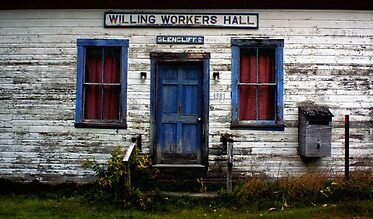
Willing Workers Red White and Blue - Study No 2


Tuesday, October 11, 2022

EP 45 Adam Finkel: In the Wake of Dobbs


In the Wake of Dobbs

Is IVF the Next Target for the Morality Police?


Listen here:

https://feeds.podetize.com/Fpj0-FsfF.mp3


Dr. Adam Finkel


Adam Finkel is a resident of Dalton, NH and Princeton, NJ. He served in leadership positions in both the Clinton and George W. Bush Administrations aimed at promulgating and evaluating risk-based regulations to protect the nation’s workers from chemical, radiological, and biological hazards. He has a Master's Degree in public policy from the JFK School of Government at Harvard and a Doctorate in Environmental Health Science from Harvard as well. In the past few years, he has jumped into important New Hampshire issues including the efforts to stop the placement of a landfill in the area adjacent to Forest Lake in Dalton as well as other local efforts to protect the NH environment. 


His concern over the ramifications of the Dobbs decision of the US Supreme Court regarding In Vitro Fertilization has started to consume additional attention of his time because he is concerned that it may be the next target of the fundamentalist forces that have gained control of the Court.


Dr. Adam M. Finkel is a Clinical Professor of Environmental Health Sciences at the

University of Michigan School of Public Health, and is also an independent consultant

specializing in plaintiffs’ exposure to toxicants in the workplace and general environment.

From 2008 to 2017, he was Executive Director of the Penn Program on Regulation, where

he was also a Senior Fellow at the Penn Law School. From 2004 to 2008, he was a Visiting

Professor of Public and International Affairs at the Woodrow Wilson School at Princeton

University, and Professor of Environmental and Occupational Health at the UMDNJ School

of Public Health. From 2000 to 2003, Dr. Finkel was Regional Administrator for the U.S.

Occupational Safety and Health Administration (OSHA) in Denver, Colorado, responsible

for OSHA’s regulatory enforcement, compliance assistance, and outreach activities in the

six-state Rocky Mountain region (Region VIII). Prior to that (1995-2000), he was Director

of Health Standards Programs at OSHA headquarters, and was responsible for

promulgating and evaluating risk-based regulations to protect the nation’s workers from

chemical, radiological, and biological hazards.


Dr. Finkel holds an Sc.D. in environmental health sciences from the Harvard School

of Public Health, a master’s degree in public policy from Harvard’s John F. Kennedy School

of Government, an A.B. in biology from Harvard College, and is a Certified Industrial

Hygienist. Dr. Finkel has pioneered methodological improvements in human health risk

assessment and cost-benefit analysis for the past 30 years, primarily in the areas of

quantitative uncertainty analysis, accounting for interindividual variability in

susceptibility, and designing regulatory processes to maximize stakeholder input and shed

light on inequitable health, economic, and employment impacts. He is one of three scholars

who served on both the “Blue Book” (1994) and “Silver Book” (2009) committees of the

National Academy of Sciences convened to evaluate EPA’s risk assessment methods. He is

co-author of four books, including the 2014 volume Does Regulation Kill Jobs? (Univ. of

Pennsylvania Press). In 2006, he received the David P. Rall Award for Advocacy in Public

Health from the American Public Health Association, for “a career in advancing science in

the service of public health protection.” In 2013, he received the Alumni Leadership in

Public Health Practice award from the Harvard School of Public Health. He lives in

Pennington, New Jersey, with his wife (a clinical psychologist) and 21-year-old daughter;

he is also a professional singer and choral conductor.


Links and Notes


https://indepthnh.org/2022/09/16/landfill-setback-legislation-re-filed-day-after-veto-override-failed-in-n-h-senate/


https://sph.umich.edu/faculty-profiles/finkel-adam.html


Preview attachment AFinkel op-ed concord NH 82820 OSHA.pdf


https://nhsecrets.blogspot.com/2022/10/in-wake-of-dobbs-is-ivf-next-target-for.html


https://centristchange.blogspot.com/2022/10/ep-75-adam-finkel-in-wake-of-dobbs.html


In the Wake of Dobbs

Is IVF the Next Target for the Morality Police?


Dr. Adam Finkel


Adam Finkel is a resident of Dalton, NH and Princeton, NJ. He served in leadership positions in both the Clinton and George W. Bush Administrations aimed at promulgating and evaluating risk-based regulations to protect the nation’s workers from chemical, radiological, and biological hazards. He has a Masters Degree in public policy from the JFK School of Government at Harvard and a Doctorate in Environemtnal Health Science from Harvard as well. In the past few years he has jumped into important New Hampshire issues including the efforts to stop the placement of a landfill in the area adjacent to Forest Lake in Dalton as well as other local efforts to protect the NH environment. 


His concern over the ramifications of the Dobbs decision of the US Supreme Court regarding In Vitro Fertilization have started to consume addition attention of his time because he is concerned that it may be the next target of the fundamentalist forces that have gained control of the Court.


Dr. Adam M. Finkel is a Clinical Professor of Environmental Health Sciences at the

University of Michigan School of Public Health, and is also an independent consultant

specializing in plaintiffs’ exposure to toxicants in the workplace and general environment.

From 2008 to 2017, he was Executive Director of the Penn Program on Regulation, where

he was also a Senior Fellow at the Penn Law School. From 2004 to 2008, he was a Visiting

Professor of Public and International Affairs at the Woodrow Wilson School at Princeton

University, and Professor of Environmental and Occupational Health at the UMDNJ School

of Public Health. From 2000 to 2003, Dr. Finkel was Regional Administrator for the U.S.

Occupational Safety and Health Administration (OSHA) in Denver, Colorado, responsible

for OSHA’s regulatory enforcement, compliance assistance, and outreach activities in the

six-state Rocky Mountain region (Region VIII). Prior to that (1995-2000), he was Director

of Health Standards Programs at OSHA headquarters, and was responsible for

promulgating and evaluating risk-based regulations to protect the nation’s workers from

chemical, radiological, and biological hazards.


Dr. Finkel holds an Sc.D. in environmental health sciences from the Harvard School

of Public Health, a master’s degree in public policy from Harvard’s John F. Kennedy School

of Government, an A.B. in biology from Harvard College, and is a Certified Industrial

Hygienist. Dr. Finkel has pioneered methodological improvements in human health risk

assessment and cost-benefit analysis for the past 30 years, primarily in the areas of

quantitative uncertainty analysis, accounting for interindividual variability in

susceptibility, and designing regulatory processes to maximize stakeholder input and shed

light on inequitable health, economic, and employment impacts. He is one of three scholars

who served on both the “Blue Book” (1994) and “Silver Book” (2009) committees of the

National Academy of Sciences convened to evaluate EPA’s risk assessment methods. He is

co-author of four books, including the 2014 volume Does Regulation Kill Jobs? (Univ. of

Pennsylvania Press). In 2006, he received the David P. Rall Award for Advocacy in Public

Health from the American Public Health Association, for “a career in advancing science in

the service of public health protection.” In 2013, he received the Alumni Leadership in

Public Health Practice award from the Harvard School of Public Health. He lives in

Pennington, New Jersey, with his wife (a clinical psychologist) and 21-year-old daughter;

he is also a professional singer and choral conductor.


Links and Notes


https://indepthnh.org/2022/09/16/landfill-setback-legislation-re-filed-day-after-veto-override-failed-in-n-h-senate/


https://sph.umich.edu/faculty-profiles/finkel-adam.html


Preview attachment AFinkel op-ed concord NH 82820 OSHA.pdf


Friday, July 1, 2022

EP 44 Congressman Dick Swett: Civility, Vision and Honor


 Congressman Dick Swett:: Civility, Vision, and Honor Matter


In an era where civility is a rare commodity, recalling the way that Dick Swett conducted himself as a US Congressman and later as an Ambassador to Denmark is a reminder that civility, humility and conscience are still honorable and - perhaps even possible again.


Dick was elected to the second congressional district seat in congress in 1990 and in 92 he was handily re-elected for another term.


The turning point of Dick's political fortunes came in 1994 with the successful passage of the assault weapons ban. Despite the danger to his own career, Dick voted for the measure and it became law. He lost his reelection bid by less than a percentage point.  FOLLOWING ON THE HEELS of the ban,  there was a decline in gun violence but when the ban was not extended under George W. Bush we reverted to the status quo ante and we all know what that has looked like for our country.


In 1998 he was named Ambassador to Denmark by President Bill Clinton a post he held until 2001.


In this podcast I speak with Dick Swett about his political journey and his life journey since his act of courage led to the passage of the (temporary) assault weapons ban in 1994 and his razor close loss, fueled by the NRA, in the subsequent election.


From Dick to FB friends.

Saw this great quote tonight:

"The person who cannot listen to an argument which opposes his or her views either has a weak position or is a weak defender of it. No opinion that cannot stand discussion or criticism is worth holding. And it has been wisely said that the person who knows only half of any question is worse off than the person who knows nothing of it. He or she are not only one sided, but their partisanship soon turns them into an intolerant and a fanatic. In general it is true that nothing which cannot stand up under discussion and criticism is worth defending."

Elder James E. Talmage


Richard Swett. Richard Nelson Swett (born May 1, 1957) is an American politician from the U.S. state of New Hampshire who served as the U.S. representative for New Hampshire's 2nd congressional district from 1991 to 1995. He also served as the U.S. Ambassador to Denmark from 1998 to 2001.


Richard N. Swett

Ambassador to Denmark

Richard Swett was nominated by President Clinton to be U.S. Ambassador to Denmark on April 2, 1998 and was confirmed by the Senate on July 31, 1998.

In 1990, Richard N. Swett was elected to the U.S. House of Representatives 2nd Congressional District of New Hampshire. In Congress, he served as a member of the Committee on Public Works and Transportation; a member of the Committee on Science, Space, and Technology; and a member of the Congressional Delegation for Relations with the European Parliament and the Congressional Human Rights Caucus. Congressman Swett co-authored the landmark Congressional Accountability Act. He also authored the Transportation for Livable Communities Act and introduced bills to encourage energy conservation and use of renewable energy. In 1996, after winning a primary contest, Congressman Swett was the Democratic nominee for the U.S. Senate. He was narrowly defeated in the general election.

In the private sector, Congressman Swett's range of business experience encompasses architectural design, project management, corporate management, project development, and finance. He has been active in real estate design and development, alternate energy development, energy conservation, industrial development, and export promotion. For several years he has operated a consulting firm doing business in the United States and eastern and central Europe. He is a licensed architect in California and New Hampshire.

Congressman Swett is a member of the American Institute of Architects, is the state Chair of the U.S. Olympic Committee, and is involved in various other civic organizations. He is also a contributing author to the book, A Nation Reconstructed: A Quest for the Cities That Can Be, and had numerous articles published as a Member of Congress.

Congressman Swett was born on May 1, 1957, in Lower Merion, Pennsylvania. He received a Bachelor's Degree in Architecture in 1979 from Yale University. The U. S. Junior Chamber of Commerce named Congressman Swett one of the Ten Outstanding Young Americans in 1993. He was also named one of the Ten Most Influential People in New Hampshire by New Hampshire Business Magazine that same year. He has been awarded the Presidential Citation by the American Institute of Architects, as well as numerous honorary degrees including an Honorary Doctor of Laws Degree from Franklin Pierce College in Ringe, New Hampshire. He received the National Award from the Residential Caregivers Association for work on behalf of residential care facilities throughout the United States. The American Legion awarded him the National Economic Commission Citation of Appreciation.


https://www.climateprosperitysolutions.com/

Climate Prosperity Enterprise Solutions (CPES) is a community-focused development firm working to create sustainable local economies through an innovative wealth creation model.


Sunday, June 26, 2022

EP 43 Here Comes the Sun - Daniel Weeks, Revision Energy and the Fight for a Livable World.


EP 69. Here Comes the Sun - Daniel Weeks, Revision Energy and the Fight for a Livable World.


My conversation with Dan Weeks was a refreshingly optimistic moment in these troubling times. He’s no Pollyanna about the challenges that we face but he definitely sees the magnificent and expansive view from the summit, even as he recognizes the mountains still to climb. 


Listen here:

https://feeds.podetize.com/ep/XjHX_LDuK/media


A 12th-generation Granite Stater, Dan Weeks is well steeped in New Hampshire history but he is also a citizen of the world. Dan left New Hampshire after high school to serve with AmeriCorps and attend Yale and Oxford on scholarships. He lived and worked on four continents before returning to NH with his South African wife Dr. Sindiso Mnisi Weeks, a human rights lawyer and academic. Dan and Sindiso are the proud parents of three young children.


Today Dan is a director at ReVision Energy, an employee-owned solar company in Brentwood. and lives in Nashua with his wife and kids.


Dan is an outspoken clean energy advocate and entrepreneur on a mission to transition New England and the world from fossil fuels to renewable energy. As Vice President of Business Development at ReVision Energy, Dan leads commercial sales, project finance, and development for the region's largest clean energy company while promoting climate action at the state and federal level. He has been named one of New Hampshire's “Most Influential Business Leaders” by NH Business Review, “Young Professional of the Year” by Stay Work Play New Hampshire, and "Forty Under 40" by the New Hampshire Union Leader.


Wind on the Floodplain Forest Floor

Prior to ReVision Energy, Dan was Executive Director of Open Democracy, where he continues to serve on the Advisory Board, and president of Americans for Campaign Reform (now Issue One). In 2012-13, he traveled the United States by Greyhound Bus on a poverty-line budget of $16/day researching poverty and political exclusion on a fellowship from Harvard. He is the author of "Democracy in Poverty: A View From Below" and has written for The Atlantic, New York Times, Boston Globe, Christian Science Monitor, and other outlets. He continues to write and speak on public affairs and serve on numerous nonprofit boards.


Revision Energy

https://www.revisionenergy.com/


A CALL TO CONSERVATIVES

https://www.fosters.com/news/20190920/call-to-conservatives

By Dan Weeks

Posted Sep 20, 2019 at 6:06 PM


When my family first joined the Republican Party in the 1800s, they were conservatives in the original sense of the term. As farmers and businessmen, soldiers and public servants, my forebears were intent on conserving New Hampshire’s most precious assets, from our land and water to our self-reliant way of life.


The first John Weeks was elected to Congress in 1828 as a member of the original Republican Party, defined by its Jeffersonian embrace of rural life and against a centralizing aristocracy and corporate corruption. He is best known for leading an 1820 expedition into the White Mountains, which resulted in the naming of New Hampshire’s highest peaks. He died in the shadow of that Presidential Range at the same time a young Illinois Congressman named Abraham Lincoln was helping found the second Republican Party.


Decades later, another Republican John Weeks of Coos County would make his name in Congress as author of the Weeks Act of 1911, establishing the Eastern National Forest as a landmark in land and water conservation. In a letter to his son (my great-granddad) Sinclair Weeks, who would follow in his footsteps as a senator and secretary of commerce under President Eisenhower, John summarized his notion of principled, pragmatic leadership: “A man is a leader, legislatively, when he knows more than those who are serving with him. He does not need to be an orator, have wealth or any other qualifications than to have the facts.”


Although their time has passed, the time for such a brand of fact-based conservatism in Congress and Concord has not. Indeed, all I know of these three men and the conservative tradition out of which they came leads me to believe they would follow the science and act with urgency to conserve our common home for future generations, were they faced with today’s climate crisis.


Against this backdrop, I have been saddened to see New Hampshire’s Republican governor question climate science and pressure his fellow “conservatives” in the N.H. House and Senate to sustain a slew of vetoes denying climate action this week.


When asked about climate change in a 2016 gubernatorial debate, Gov. Chris Sununu stated simply, “No, I don’t believe in it.” To back up his position, Sununu provided the following perplexing logic from his position as then-CEO of a family-owned ski resort: “I don’t believe in [climate change] because I know we might have had an awful mild winter this year, and we saved an awful lot of money in our snow budget but I can tell you that next year, we may not be as lucky.”


Even more perplexing are Gov. Sununu’s oft-repeated assertions that “I’m an environmental engineer” and “you’ve never had a governor with the experience that I bring to the table...when it comes to understanding the environment and climate change.” A NHPR investigation subsequently found that Sununu was never licensed as a professional engineer, never sat for the exam, and more than a decade has passed since he worked in the field of civil or environmental engineering – small comfort for a citizenry that overwhelmingly accepts the scientific consensus on global warming.


But denying scientific fact and exaggerating your own credentials are one thing; blocking the will of the people when it comes to conserving New Hampshire’s natural environment and way of life is something else.


Which brings me to HB 365, the bipartisan bill to raise the net metering cap for homegrown renewable energy projects and cut climate-warming carbon emissions, which was vetoed by Gov. Sununu and narrowly failed an override vote this week.


In the ordinary course of events, this bill would be anything but controversial. It passed the New Hampshire House with over 70% support for the second year in a row (including dozens of Republican backers) and won a unanimous voice vote in the Senate. It is a top priority for environmental advocates and the clean energy industry, which employs thousands of Granite Staters and brings billions in local investment to increase our self-reliance and energy independence.


Beyond the usual suspects, the policy is backed by many of the state’s leading businesses seeking to offset their high electricity rates with homegrown renewable energy, who gathered at the Statehouse this summer in advance of the governor’s veto. Dozens of New Hampshire cities and towns have also called on Concord to raise the arbitrary cap so they can turn old landfills into solar farms while saving taxpayer money and combating climate damage.


Most importantly, surveys find that fully 85% of registered voters nationwide – including seven in 10 Republicans – support far more aggressive climate action than a 5 MW net metering cap: requiring utilities in state to produce 100% of their electricity from renewables by 2050 rather than the measly 0.7% currently sought from solar.


Yet in spite of this overwhelming public and legislator support, HB 365 died this week after numerous Republican representatives switched their votes under pressure from Gov. Sununu. According to multiple reports, Sununu told a closed-door caucus of Republican lawmakers that sustaining his veto wasn’t about the issue or the people of New Hampshire – it was about him. He even went so far as to attack New Hampshire’s fledgling solar industry as “crony capitalism at its worst.” Did he forget the tens of thousands of dollars he has raised from fossil fuel companies and utilities? Or does he remember them all too well?


The time has come for a return to the old tradition of fact-based conservatism and a Grand Old Party that places conservation at its core. After all, what could be more conservative than preserving this one and only planet we call home by stemming the climate crisis before it is too late?


Dan Weeks is a director at ReVision Energy, an employee-owned solar company in Brentwood. He lives in Nashua with his wife and kids.

--


Washday Impressions in Ossipee


TedTalk

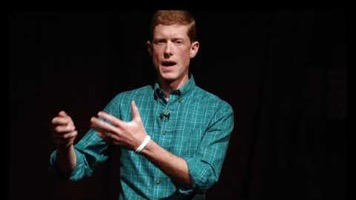
Power to and From the People; Creating an Energy Democracy | Dan Weeks | TEDxWolfeboro


Democracy in Poverty: A View From Below Kindle Edition

by Daniel Weeks (Author) Format: Kindle Edition


4.2 out of 5 stars

3 ratings


See all formats and editions

Kindle


$0.99


Read with Our Free App


Best price

What is the connection between poverty and politics today? Does money determine a person's political voice? Is poverty a democracy problem? To tackle these thorny questions, political reformer Daniel Weeks traveled 10,000 miles through 30 states by Greyhound bus, speaking with hundreds of fellow citizens in poverty and recording his experiences on a poverty-line budget of $16 a day. From benches on Capitol Hill to the Lower Ninth Ward of New Orleans, from the desert colonias of New Mexico to Skid Row in L.A., his profiles and careful analysis put a human face on poverty and political inequality in the 21st century. Building on the 2014 "Poor (in) Democracy" series for The Atlantic, this book explores the complex relationship between institutional poverty and political power, including how economic inequalities enter the political sphere and undermine political equality; how political arrangements deepen and entrench poverty; and what it means in real life to be poor and (seek to) participate in politics.


The stories Weeks recounts from "second-class citizens" across the United States challenge our cherished assumptions about the American dream. Consumed by the daily demands of subsistence and excluded from political participation by both formal and informal means, the people profiled are struggling to make their voices heard where it matters most: in politics. Their poverty is a problem – a moral outrage, in fact – but it's not the kind of problem we think. More than an economic or social concern, their poverty is political: it is embedded in the very structures of society and maintained by an unjust distribution of political power. To counteract systemic poverty and political inequality, Weeks proposes a slate of reforms aimed at strengthening American democracy, so that all citizens can make their voices heard.


To learn more, visit http://www.PoorInDemocracy.org


More about the author at http://ethics.harvard.edu/people/daniel-weeks


<a target="_blank" href="https://www.amazon.com/Democracy-Poverty-Below-Daniel-Weeks-ebook/dp/B00ZDT65X4/ref=sr_1_1?crid=3U01YT1P63K9R&amp;keywords=Poverty+Daniel+Weeks&amp;qid=1656367203&amp;sprefix=poverty+daniel+weeks%252Caps%252C118&amp;sr=8-1&_encoding=UTF8&tag=waynedking0f-20&linkCode=ur2&linkId=ca8124516c86fdc7404e016fc3c27a14&camp=1789&creative=9325">Democracy in Poverty</a>

The Winter Warrior